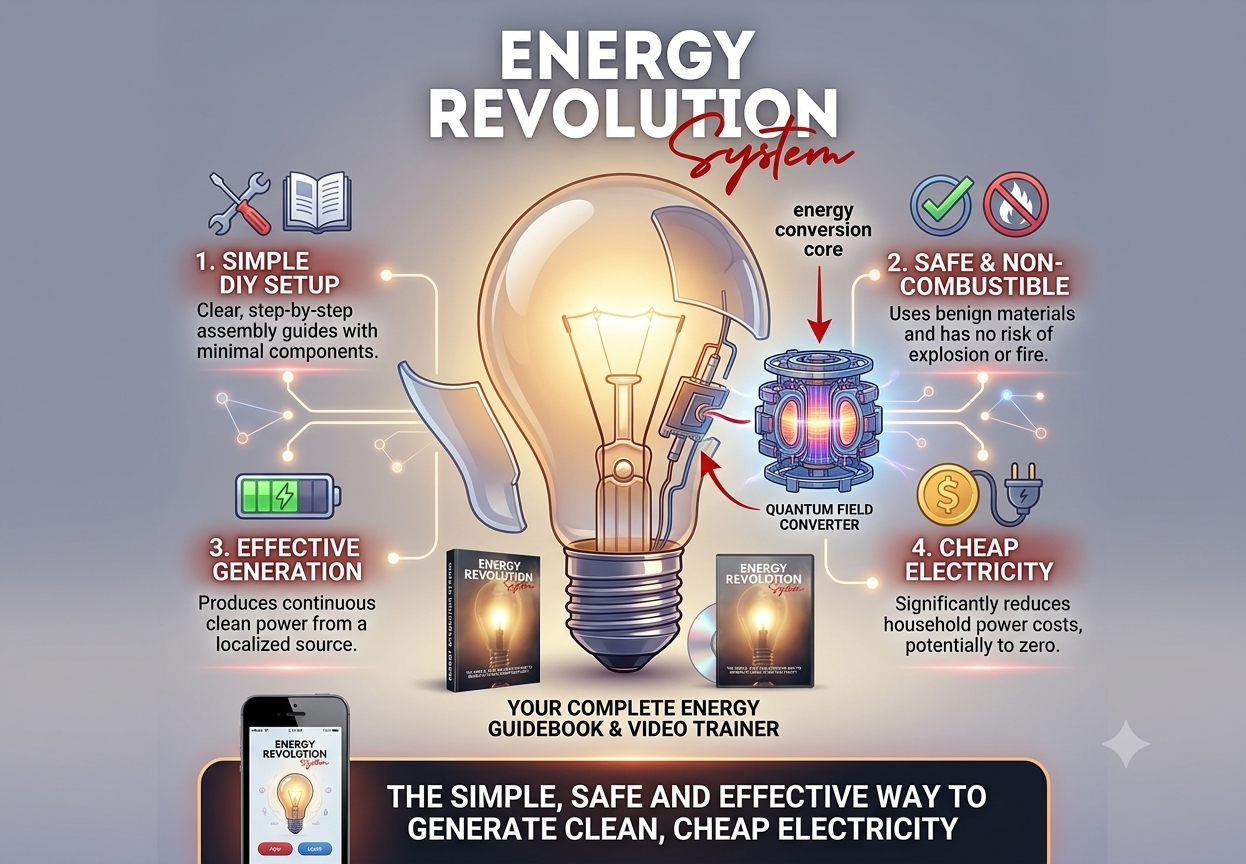
The Energy Revolution System is a digital DIY energy blueprint marketed toward people who want to explore alternative ways of producing supplemental electricity at home. Unlike a conventional generator or solar panel system, it is not a finished machine delivered to your doorstep. Instead, the Energy Revolution System is presented as a set of digital instructions, diagrams, component information, and guidance for assembling an electrical project yourself.
That distinction matters.
If you have seen advertisements describing an energy revolution system DIY power generator, promising dramatically lower electricity bills or greater energy independence, it is understandable to wonder whether the product is a genuine practical solution or simply an ambitious marketing proposition.
This review takes a closer look at what the product actually appears to offer, how the underlying electrical concepts relate to established science, what buyers receive, the likely costs beyond the purchase price, potential benefits, limitations, safety considerations, and who may or may not find the project worthwhile.
The information available about the product indicates that it is primarily a digital instructional product rather than a certified household generator. Published material describes blueprints, diagrams, assembly instructions, a materials list, video guidance, a fast-start guide, maintenance information, future updates, and additional bonus resources. Reported promotional pricing has been around $29, although prices and offers can change.
Most importantly, expectations should remain realistic. The strongest promotional claims surrounding the product should be regarded as marketing claims rather than independently demonstrated performance figures. One recent analysis specifically noted that the finished device has not been independently laboratory tested and that the seller describes the project as an experiment.
So, is the Energy Revolution System worth considering?
For a technically curious DIY enthusiast looking for an educational project, potentially yes. For someone expecting a certified whole-home power system that magically eliminates an electricity bill, the answer is much less favorable.
Let's examine why.
There are several reasonable reasons someone might choose the product — and reasons to keep expectations realistic.
The entry price is relatively low compared with many conventional home-energy projects.
It offers an educational, hands-on experience for technically curious DIY users.
The system provides structured material rather than requiring users to research every part independently.
Important publication note: the following are illustrative sample testimonials created for website layout/testing purposes. They are not verified customer statements and should not be presented as genuine reviews.
"I bought the guide mainly because I wanted to understand how the coil and wiring concept worked. The instructions gave me a clearer starting point than trying to piece everything together from random videos. I wouldn't describe it as a replacement for my home's electricity, but I found the project interesting and educational."
"The biggest surprise was realizing that the product is a digital blueprint rather than a finished generator. Once I understood that, my expectations changed. I enjoyed building the project, but anyone buying it should budget for the components and take electrical safety seriously."
"For me, the value was more about learning than saving a huge amount on the electricity bill. The project was interesting, but I would not buy it expecting an instant off-grid solution. If you like DIY electronics, it is more appealing than it is for someone simply looking for backup power."
The Energy Revolution System is essentially a digital DIY energy system designed to teach purchasers how to assemble a small electrical generator or electromagnetic device from separately purchased components.
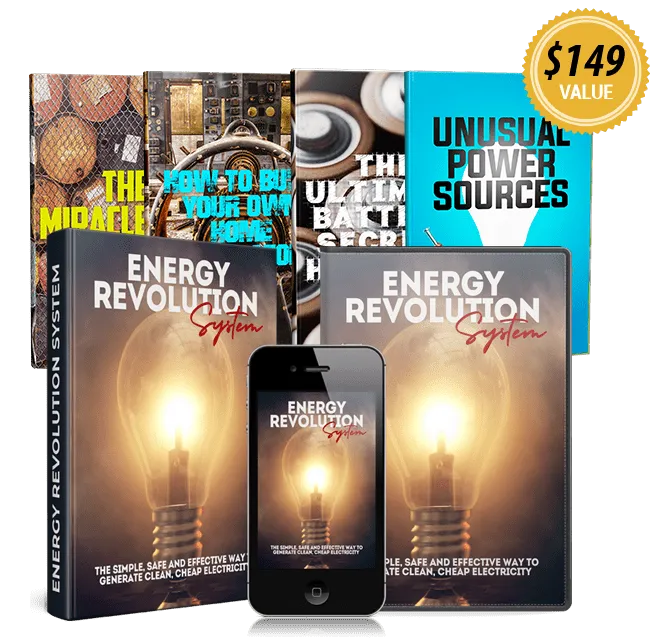
Rather than purchasing a completed appliance, the buyer receives access to instructional material. Reported components of the package include PDF blueprints, step-by-step instructions, diagrams, video walkthroughs, and a materials list.
The basic proposition is appealing: instead of paying thousands of dollars for a conventional residential energy installation, a homeowner can investigate a much smaller DIY project using readily available electrical and hardware components.
The entry price is relatively low compared with many conventional home-energy projects.
May ultimately be its most defensible benefit — hands-on learning about electricity.
An entry point into broader subjects such as solar generation, storage, and load management.
Framed as capable of producing limited supplemental electricity, not powering a household.
The Energy Revolution System is presented around electromagnetic principles involving coils, wiring, magnets, and electrical energy transfer.
At a high level, the project uses a specially configured coil and related components to create electromagnetic interactions.
The vendor connects this concept to Tesla's historical bifilar-coil design and argues the arrangement can improve energy transfer and reduce certain forms of loss within an electrical circuit.
Electromagnetic induction is a well-established phenomenon. Moving magnetic fields relative to conductors can induce electrical voltage, and electrical circuits can store and release energy through magnetic and electric fields.
The available descriptions indicate that the digital package contains several instructional components, used in the following order.
A shorter guide is reportedly included to help users get started without working through the entire material immediately.
The main blueprint provides the basic project information needed to understand the proposed construction.
Visual references are included to clarify the arrangement of the system.
The component list helps users identify the items they need to source independently.
The step-by-step material explains the intended construction sequence, with video walkthroughs reported as part of the package.
Key Features of Energy Revolution System
Rather than leaving the purchaser to figure out the project independently, the system reportedly provides structured instructions intended to take the reader from the required components through the construction process. For someone comfortable with DIY projects, this can be more useful than attempting to design a circuit from scratch. The value is therefore largely educational and procedural.
Electrical projects can become confusing when instructions rely entirely on written explanations. Diagrams can make component placement, wire routing, coil construction, and connections easier to understand. The reported package includes diagrams and schematics, which is potentially one of its stronger features. However, diagrams do not remove the need for electrical competence.
The product is also reported to include video guidance. For hands-on projects, video can be useful because it can demonstrate the physical appearance of an assembly step, clarify the orientation of components, and make complicated instructions easier to follow. The usefulness of the videos will ultimately depend on their quality and clarity.
According to published product information, the required materials are intended to be sourced separately from hardware or electronics suppliers. Reported estimates vary: one source described materials costing roughly $73 for a smaller configuration and up to approximately $210 for a larger configuration, while another publication cited a lower general materials estimate. This is an important distinction when calculating the true project budget.
The product is marketed as accessible to ordinary DIY users rather than exclusively to professional electrical engineers. That can be attractive for people who enjoy learning by building. Still, "beginner-friendly" should never be interpreted as "risk-free." Electrical work can cause shock, burns, fires, equipment damage, or other hazards if performed incorrectly. Anyone considering modifications involving household wiring should consult a qualified electrician and verify applicable electrical requirements.
A bifilar coil uses two lengths of wire arranged together in a particular winding configuration. Tesla patented a bifilar coil design in the late nineteenth century. One characteristic of the configuration is its different distributed capacitance compared with a conventional single-wire winding.
A coil can influence how energy is stored, transferred, or released in a circuit. It can affect electrical characteristics such as inductance and capacitance. Those effects can be useful in electronics and electrical engineering. But improved electrical behavior is not equivalent to creating energy.
Electromagnetic induction occurs when a changing magnetic field induces voltage in a conductor. Generators used around the world rely on this basic principle — the source of the energy is the mechanical work being performed, not the coil itself.
Published information describes a 60-day money-back guarantee.
A refund period can reduce the financial risk associated with purchasing a digital guide, but buyers should read the current terms carefully.
It is also important to understand exactly what must be done to request a refund and whether any restrictions apply. The safest approach is to save your order confirmation and review the seller's current refund policy immediately after purchase.
Order Risk-Free TodayAnswers pulled directly from the published product information.
The Energy Revolution System is a digital DIY energy blueprint. It provides instructional material intended to help users assemble an electrical project using separately purchased components rather than delivering a finished generator.
No. The product is primarily a digital instructional package. The buyer receives information and guidance and must source and assemble the physical components.
The product appears to be a real digital product that provides a DIY blueprint. The more difficult question concerns its performance claims. The available material does not independently establish the strongest claims about electricity generation or dramatic bill reductions.
An 80% reduction is a promotional claim and should not be treated as a guaranteed result. The available reviews do not provide independent evidence demonstrating that an average household will consistently achieve an 80% reduction.
The product's concept is marketed as being inspired by Tesla's bifilar-coil design. Tesla's bifilar coil is a genuine historical electrical design, but the existence of that design does not prove claims about generating free energy.
It refers to a coil configuration based on the broader bifilar-coil concept. The arrangement uses two conductors wound together in a particular configuration and has legitimate electrical characteristics worthy of study.
Reported estimates vary considerably. Published descriptions have cited figures ranging from roughly $73 for a smaller configuration to around $210 for a larger one, while another published assessment cited approximately $100–$120. Actual costs depend on configuration and local suppliers.
Do not assume that you can. Connecting homemade electrical equipment to household wiring can create shock, fire, equipment-damage, and code-compliance risks. Consult a licensed electrician and verify your local requirements before making such a connection.
Published information has described a 60-day money-back guarantee. Buyers should verify the current terms before purchasing because offers and conditions may change.
It is best suited to technically curious DIY enthusiasts who understand that they are purchasing an instructional project rather than a finished generator and who are willing to maintain realistic expectations about output.
For a technically curious DIY enthusiast looking for an educational project, potentially yes. For someone expecting a certified whole-home power system that magically eliminates an electricity bill, the answer is much less favorable.
Checkout is processed through ClickBank, a long-standing digital retail platform. ClickBank's role does not constitute an endorsement or verification of the product's claims.
Published information describes a 60-day money-back guarantee. A refund period can reduce the financial risk associated with purchasing a digital guide, but buyers should read the current terms carefully.
Questions about your order or the product? Reach the support team at: